
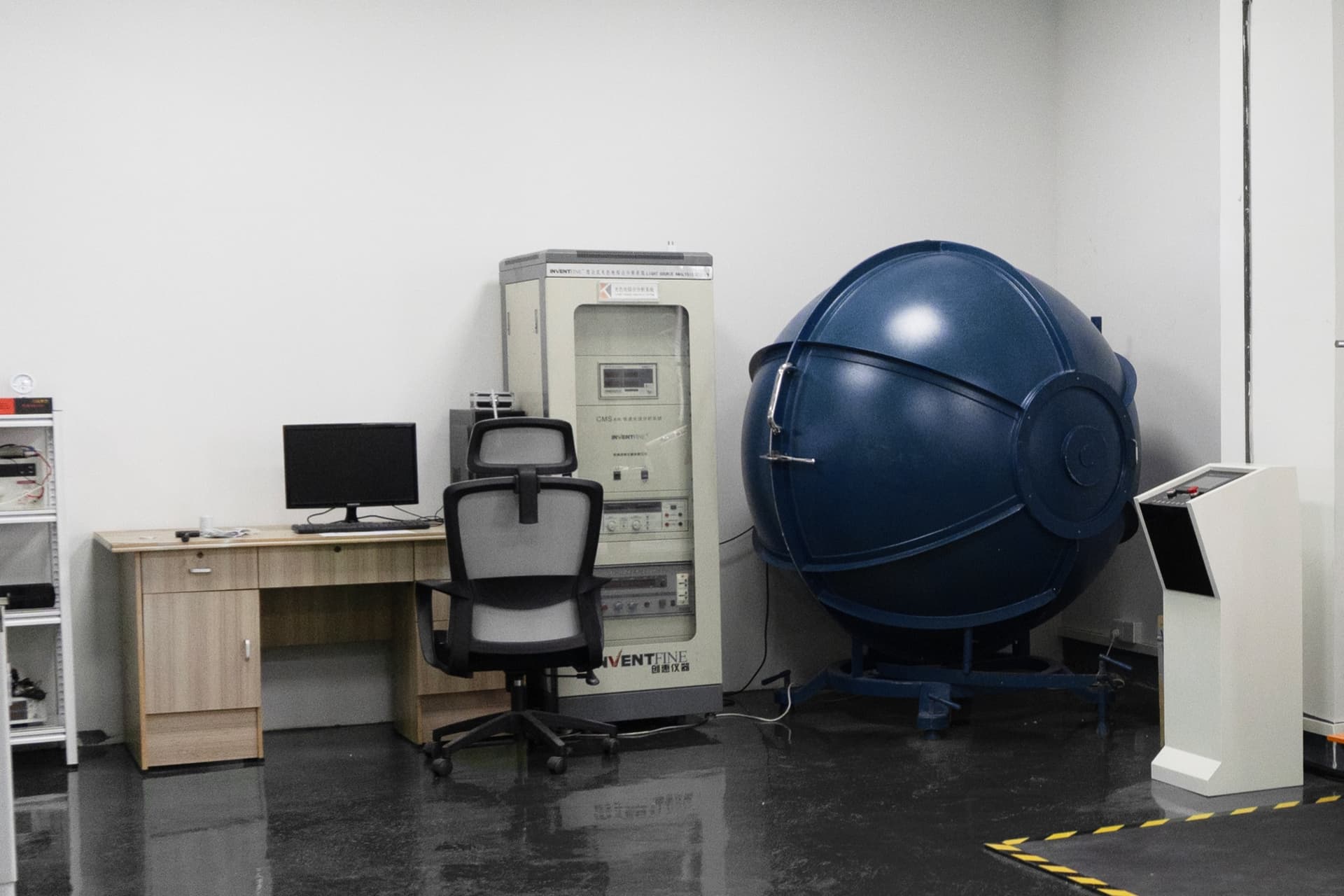
Inside Awta: The Quality Control Journey of an LED Ceiling Light
From the moment a reel of LED chips arrives at our gate to the final pre-shipment inspection, every Awta ceiling light passes through six structured QC stages. Here is what happens at each one — and what it means for the partners who put our product on their shelves.
A finished LED ceiling light looks deceptively simple — a metal back-plate, a PC diffuser, a driver, an LED board. The surface tells you almost nothing about whether it will still light up after 30,000 hours, whether it will pass a customer's pre-shipment inspection, or whether it will quietly fail in someone's living-room ceiling six months after install. The answer to all three questions lives inside the QC chain. This article walks through every stage of the QC process at Awta — what we measure, what we throw out, and what we send to the next station.
Why QC Is the Real Cost Center, Not Production
Most overseas buyers think of price as the product cost plus a small margin. In a real source factory the bigger line item — and the harder one to fake — is QC. A single batch that fails an end-customer's incoming inspection can wipe out the margin on six container loads. A single field failure that makes its way into a TÜV recall costs more than a year of factory revenue. Quality control at scale is not "checking the work" — it is the production system itself. Skip a station and you do not catch the fault sooner; you simply discover it 8,000 km later.
At Awta we run six structured QC stages inside our 15,000㎡+ Zhongshan facility — IQC at the gate, IPQC on the line, 100% aging, safety/compliance, FQC for finished goods, and OQC before each shipment leaves the dock. Below is what each stage actually does.
Stage 1: IQC — Incoming Component Inspection
Quality starts before the first screw is turned. Every batch of incoming material is logged, sampled, and tested against a documented specification before it is released to the production floor.
- LED chips: lot number, bin code (color and forward voltage), batch luminous flux test on a sampled bar
- Drivers / power supplies: input/output voltage tolerance, ripple, no-load current, surge withstand on AQL sample
- Aluminium back-plates: thickness gauge, anodising layer integrity, dimensional check against drawing
- PC diffusers: light transmittance (haze) check, UV stability sample, dimensional fit-test on a finished base
- Wires and connectors: AWG verification, insulation withstand, terminal pull-test
A reel of LED chips that fails bin verification gets quarantined and returned to the supplier — it never enters our SMT line. A batch of drivers that fails surge withstand is rejected as a whole batch, not used "carefully." The IQC log is the foundation of traceability: when a finished unit fails downstream, we walk the chain backwards to the exact incoming lot.
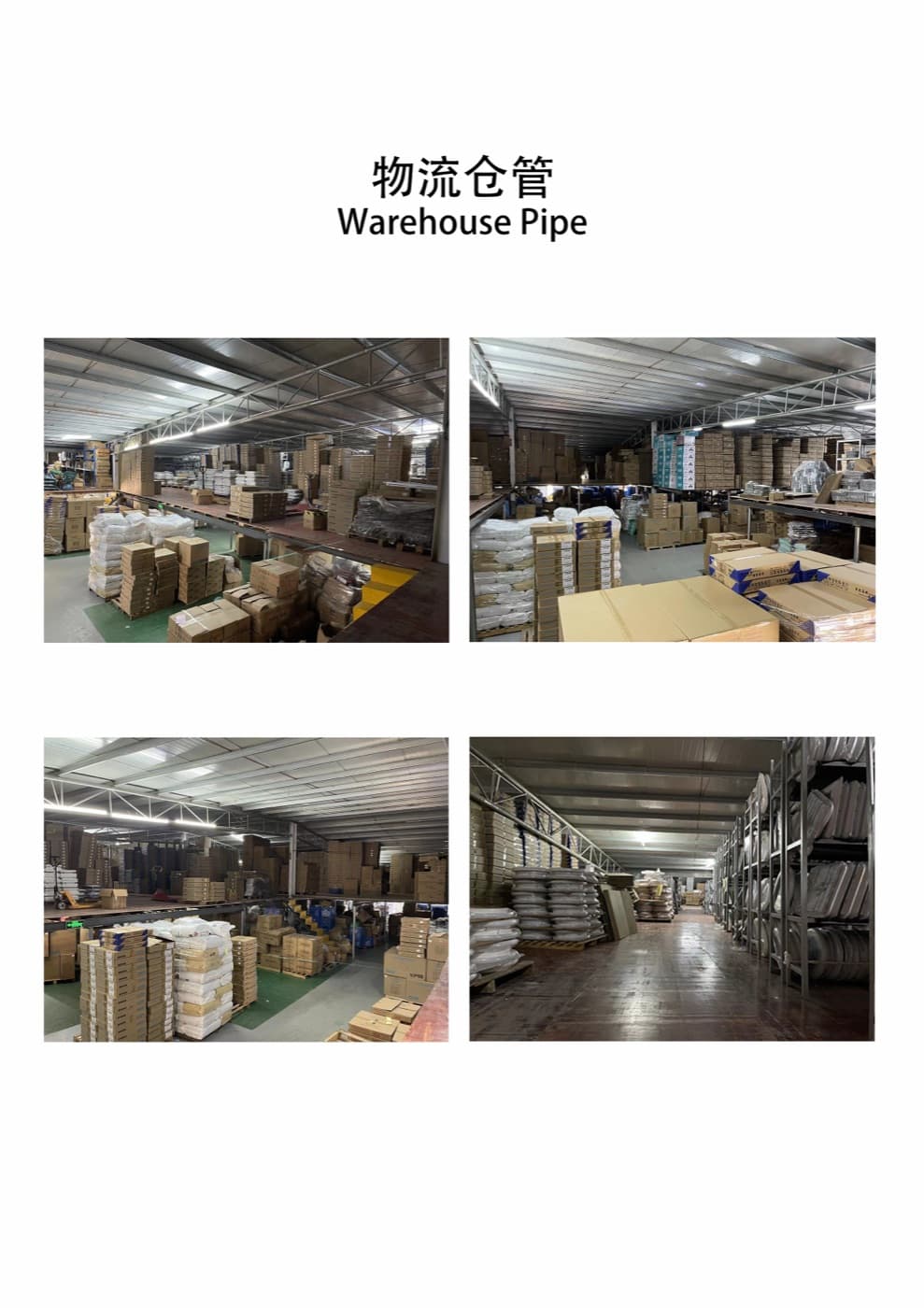
Stage 2: IPQC — In-Process Quality Control
Once material is on the line, IPQC inspectors stand at fixed checkpoints and take samples every shift. The aim here is not to catch defects after they happen, but to catch a process drift before it produces a hundred bad units.
- After SMT: AOI (automated optical inspection) on every populated PCBA — solder bridges, missing components, polarity errors. Operator stops the line on any threshold breach.
- After injection / blow molding: shot-by-shot visual on diffusers and back-plates — sink marks, weld lines, gate burns. Random hardness and gloss checks per shift.
- At assembly: torque-meter check on driver mounting screws, harness routing inspection, label legibility check.
- At packaging: count check, accessory completeness, drop test on a sampled carton.
Every IPQC checkpoint feeds a paper-and-digital log signed by both the operator and the inspector. The signed log is what gets cross-referenced when a downstream stage finds a fault.
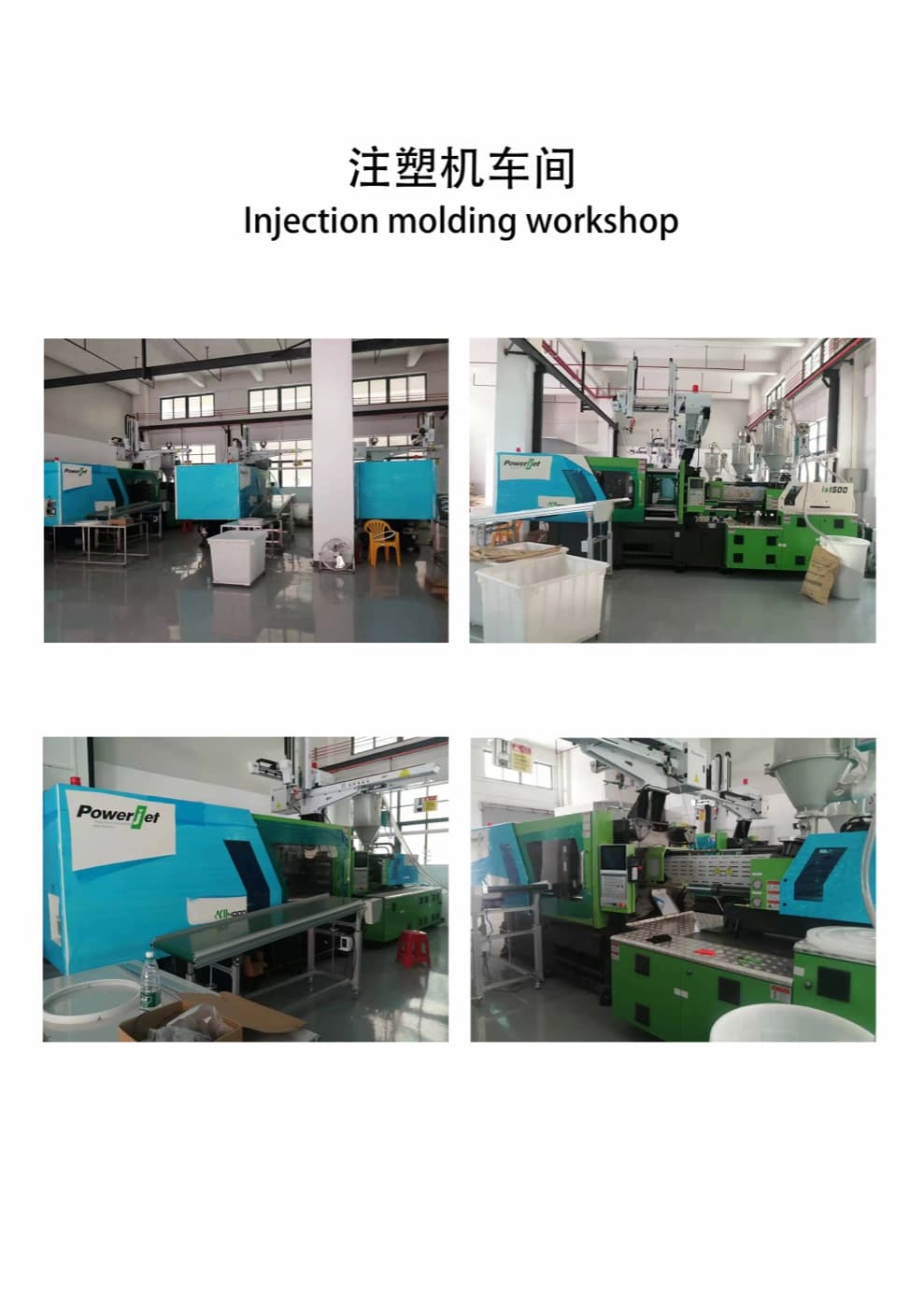
Stage 3: 100% Aging Test — 4 Hours Under Full Load
This is the stage most distinguishable from a trading-company "QC." Every single finished ceiling light — not a sample — sits on a powered aging rack for a full four-hour cycle at full load before it gets a serial number.
The aging rack is a simple bank of switched mains outlets where lights are connected and left on, monitored by a roving inspector. The purpose is to surface infant-mortality failures: a borderline driver capacitor, a hairline solder crack, an LED chip that survives bench test but fails under sustained thermal load. These failures cluster in the first few hours of operation — exactly the hours we burn off on the rack instead of in a customer's living room.
A unit that flickers, dims, or fails during aging is pulled, root-caused (driver / LED board / connector), and either repaired or scrapped depending on the fault class. The aging-test pass rate is one of the most-watched factory KPIs — a sustained drop is an early signal that something upstream (a component lot, a process parameter) has shifted.
International standards like LM-80 define long-term LED lumen maintenance over 6,000+ hours, but for production line QC, the 4-hour aging cycle is the industry standard short-cycle screen.
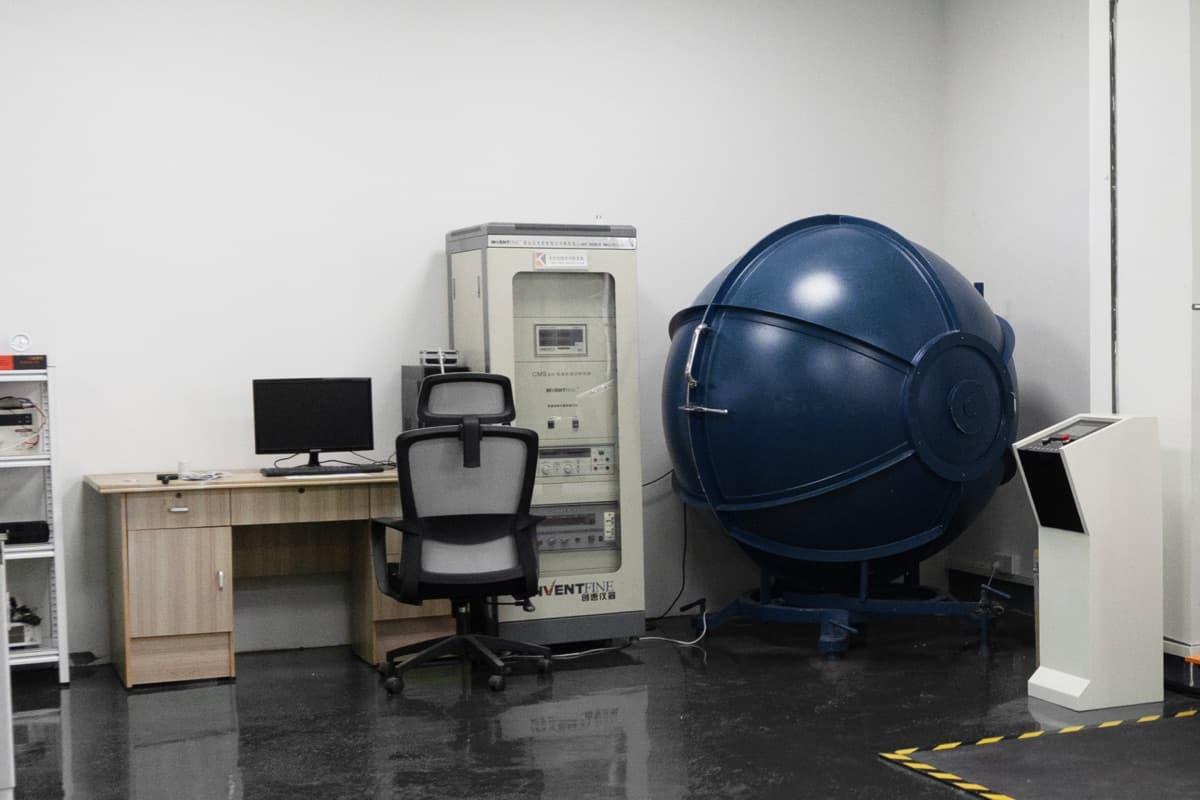
Stage 4: Safety and Compliance Testing
Safety testing happens both per-unit (high-voltage withstand on every finished unit) and per-batch (full standards testing on samples).
- Hipot / high-voltage withstand: every unit, AC ~3,000 V between live parts and exposed metal for 1 second — verifies basic insulation
- Insulation resistance: every unit, ≥ 50 MΩ at 500 V DC — verifies no creepage path
- Earth bond / continuity: every unit with metal exposed parts — verifies grounding path resistance
- EMC / EMI sample test: per-batch sample run through pre-compliance equipment for conducted and radiated emissions before mass production starts
- Standards alignment: products are designed to pass CE, CCC, ETL, TÜV, RoHS and EMC — full third-party reports available on request
Hipot failures get logged with the unit serial and the failure mode, then the unit is rebuilt and re-tested. A unit cannot ship without a passed hipot record against its serial.
Stage 5: FQC — Finished-Goods Functional Test
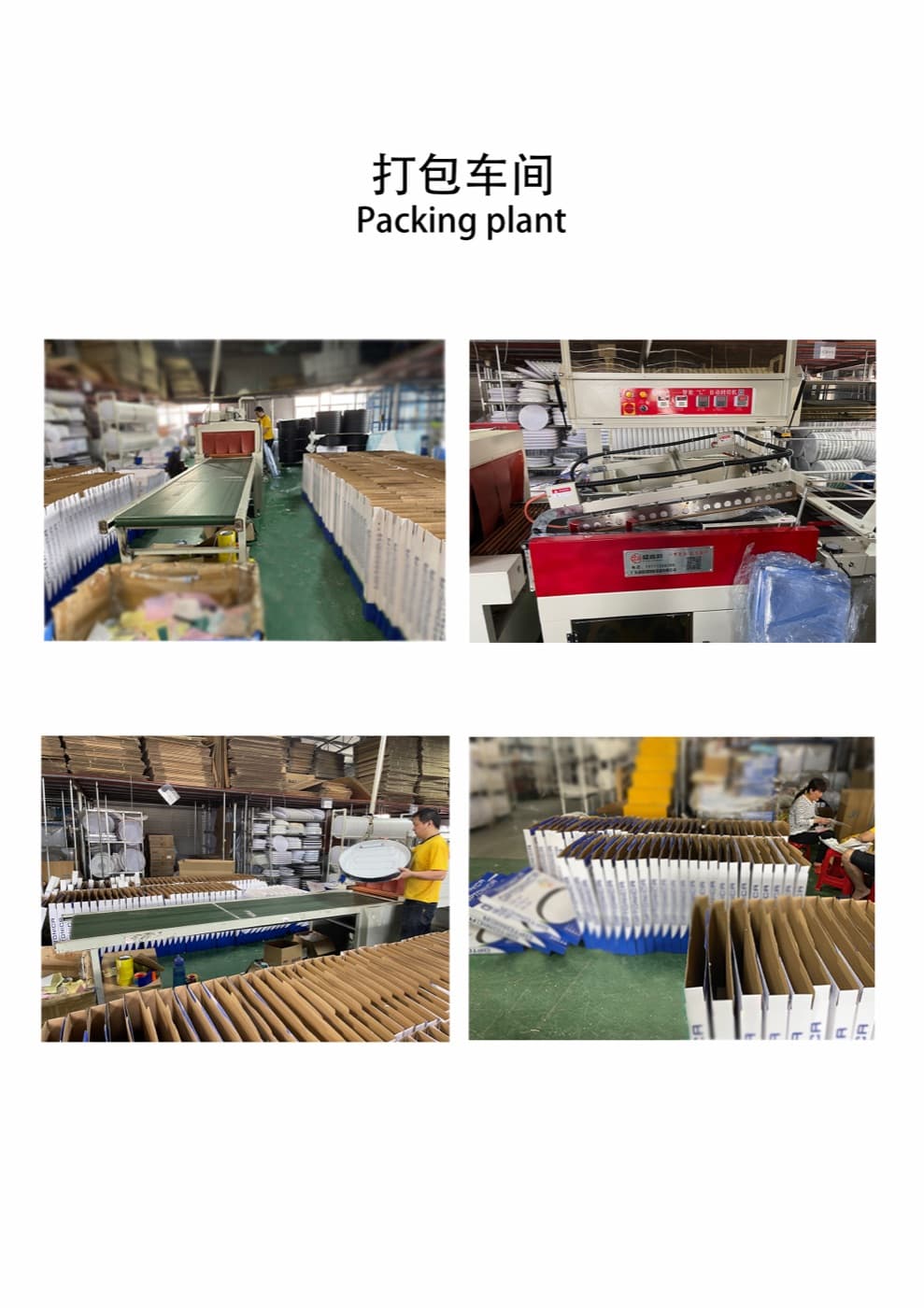
Before a finished unit is packed, it goes through a final functional bench:
- Lumen output: spot-check on integrating sphere or calibrated lux meter against the rated value
- Color temperature (CCT): verified against the SKU's nominal CCT (e.g. 3000K / 4000K / 6500K) within tolerance
- Color rendering (CRI / Ra): sample test, reported per batch
- Flicker: oscilloscope check on a sample, looking for visible flicker that would not show in a casual visual
- Dimming behaviour: if the SKU is dimmable, full sweep test from 100% down to minimum, looking for drop-out points or flicker bands
The FQC station is the last point at which the unit is treated as a circuit. After this it is packed, palletized, and treated as cargo.
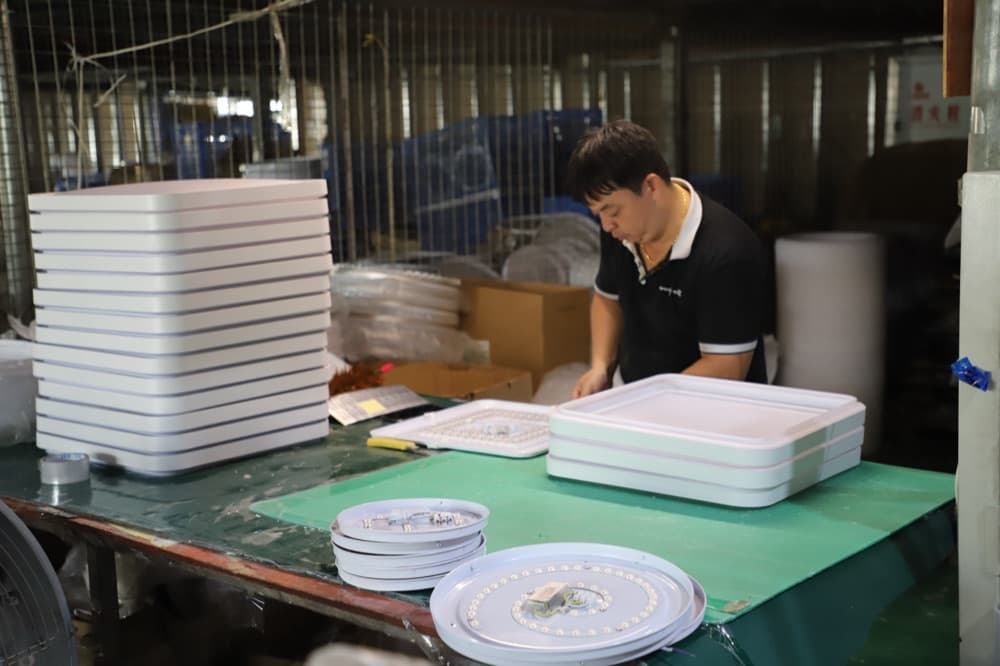
Stage 6: OQC + AQL Sampling Before Shipment
The container is staged. Before it ships, OQC runs an AQL-2.5 sampling pass against the packed cartons:
- Random pull from across the pallet (not just the top layer)
- Outer-carton count and label check, inner-box accessory check, manual switching of each sampled unit
- Drop test on a sampled carton, simulating handling shock during transit
- Final paperwork: matching the cartons to the BOM, the certificates, the user manual language pack and the buyer's PO
If the sampling pass fails AQL, the container does not ship — the run is held, root-caused, and either reworked or remade. We invite buyers to send their own pre-shipment inspector for the OQC stage; an Awta QC engineer accompanies the inspector and shares all upstream logs.
What Buyers Should Verify Before the First PO
A clean QC chain is provable. When you audit a factory — in person or remotely — these are the artefacts to ask for:
- IQC logs from a recent week, with the supplier name and lot ID redacted if needed
- Aging-rack photos with today's date written on a whiteboard in the frame
- Hipot tester model and calibration certificate — a working hipot has been calibrated within the last 12 months
- OQC AQL sampling plan in writing, with the level (1.5 / 2.5 / 4.0) the factory uses by default
- Field-failure rate for the last six months, broken down by failure class (driver / LED / mechanical / cosmetic)
A factory that hesitates on any of these is telling you what its QC chain is actually like. A factory that walks you through the data without prompting is doing what we try to do every day.
Why Source-Factory QC Beats Trading-Company QC
A trading company's "QC" usually means a final-inspection pass — sometimes thorough, sometimes a polite walk-through with a clipboard. Even the thorough ones cannot reach upstream: a defect that originates in the LED bin code, the driver capacitor lot, or the injection-mold parameter cannot be caught at the carton. By the time the trading-company QC engineer sees the unit, the fault is already cast in metal.
Source-factory QC is an unbroken chain from the inbound dock to the outbound dock, with every signature owned by the same company and the same payroll. When a fault is found at OQC, the same team can walk it backwards through IPQC, IQC, and supplier acceptance — and feed the lesson back into the standard work. That feedback loop is what slowly compounds quality over years. It is also what we mean when we say Awta is a real source factory — not a product line, but a chain of accountable people from the gate to the container.
Want to Audit Awta's QC In Person?
We host overseas buyer audits at our Zhongshan facility on three working days' notice and welcome unannounced re-audits during production. Reach out via the contact form and we will share the QC log templates, the aging-test rack layout, and the standards-test reports against your target market — well before you commit to an order.
Related Articles
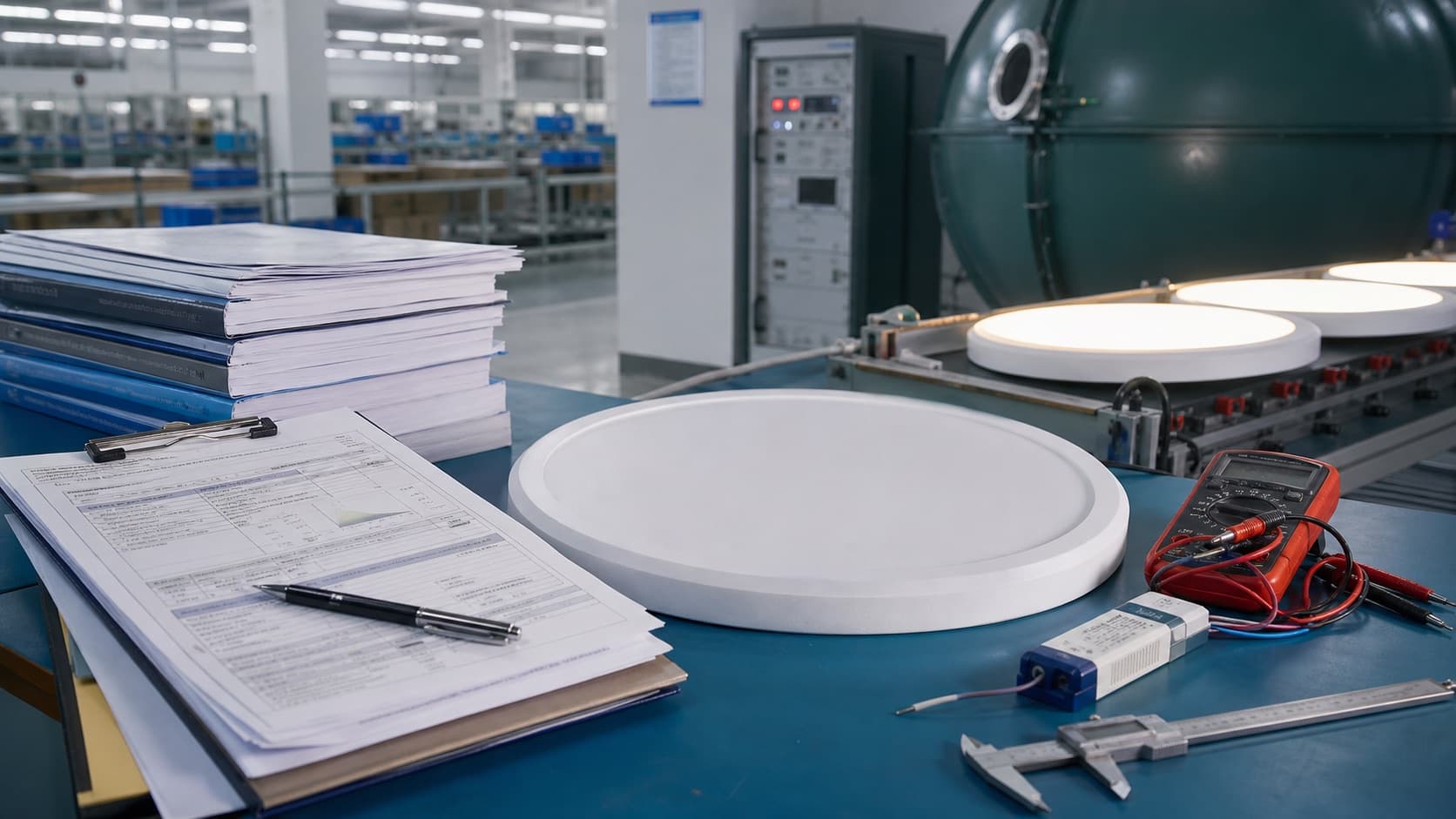
CE, RoHS, ETL and EMC for LED Ceiling Lights: What Buyers Need to Check
A logo on the box is not enough. Importers need to verify the directive, report, model family, applicant, product label and factory follow-up before they trust a ceiling-light certification pack.
Read More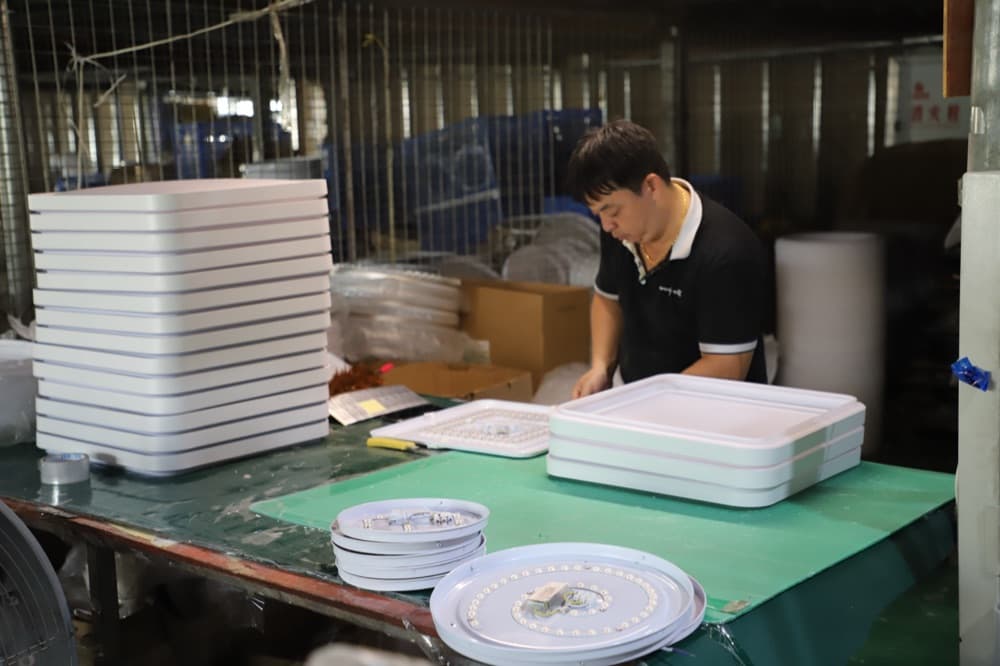
Cheap LED Ceiling Light Trap: Where Low-Quality Fixtures Cut Costs You Cannot See
A low quote on LED ceiling lights can hide cheaper drivers, lower-bin LEDs, thin heat sinks, recycled diffusers, skipped aging tests and weak certificates. Here is how importers can spot hidden cost cutting before a purchase order.
Read More