
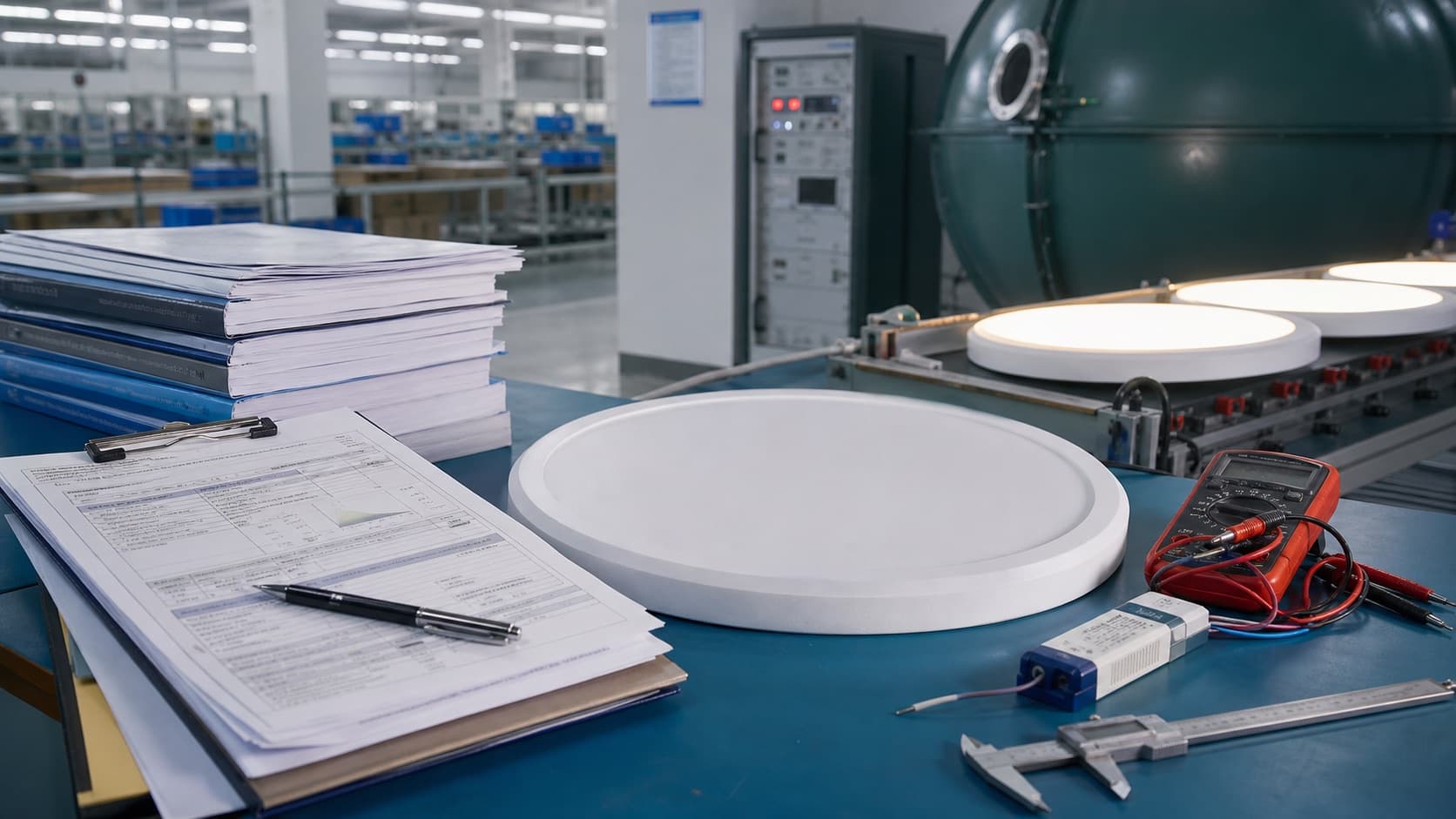
CE, RoHS, ETL and EMC for LED Ceiling Lights: What Buyers Need to Check
A logo on the box is not enough. Importers need to verify the directive, report, model family, applicant, product label and factory follow-up before they trust a ceiling-light certification pack.
Certification is where many LED ceiling-light sourcing mistakes become expensive. A quotation may say "CE RoHS ETL available", a carton mockup may show several compliance logos, and the supplier may attach a certificate screenshot in the first email. None of that proves the fixture you are buying can legally enter your target market, pass your retailer's intake check, or survive an electrical inspection on a hotel or apartment project.
For importers, distributors and project buyers, certification should be checked before the first deposit, not after the container is ready. The goal is simple: make sure the exact model, rated voltage, driver, product family, applicant, manufacturer and factory site are covered by documents that a customs officer, retailer, inspector or third-party lab can verify.
This guide explains how CE, RoHS, EMC and ETL usually fit into LED ceiling-light procurement, what documents buyers should request, and which red flags should stop an order before production starts. It is practical sourcing guidance, not legal advice. Always confirm local requirements with your importer of record, compliance consultant or certification body.
Quick Market Map
| Target market | What buyers usually ask for | What to verify before PO |
|---|---|---|
| EU / EEA | CE marking, EU Declaration of Conformity, LVD, EMC and RoHS coverage | The DoC names the right directives, the model family matches the product label, and the technical file can be supplied on request |
| United Kingdom | UKCA or accepted transition route, plus safety / EMC / RoHS evidence | Whether your sales channel still accepts CE alone, and whether the responsible UK economic operator is clear |
| United States / Canada | ETL, UL, CSA or another NRTL / SCC-recognized mark, depending on channel | The mark is listed in the lab directory, covers luminaires, and matches the exact model / control number |
| Middle East / Southeast Asia | Often CE / RoHS plus country-specific approvals | Voltage, plug, label language, customs documents and local conformity scheme requirements |
The biggest mistake is treating all logos as equal. CE is not the same type of mark as ETL. RoHS is not a safety certificate. EMC is not a lifetime-quality guarantee. Each item answers a different risk question.
CE Is a Manufacturer Declaration, Not Just a Certificate
For LED ceiling lights sold into the EU / EEA, CE marking means the manufacturer declares that the product complies with the applicable EU rules. The official EU guidance says the manufacturer is responsible for ensuring compliance and for affixing the mark. If another company has the product made and sells it under its own brand, that company may also be treated as the manufacturer for compliance purposes.
For buyers, this means a "CE certificate" alone is not enough. Ask for:
- EU Declaration of Conformity (DoC) with the legal manufacturer or responsible party
- Full test reports supporting the declaration
- Model list or model-family appendix
- Product label artwork showing rating, model, manufacturer and CE mark placement
- User manual and safety warnings for the target market
- Confirmation that private-label changes do not break the original conformity assessment
The EU CE marking guidance also makes a practical point buyers often miss: the Declaration of Conformity and technical documentation must be kept up to date and retained after the product is placed on the market. If you change the driver, plastic material, LED board, housing or brand owner, the document set may need review.
LVD: Electrical Safety for Mains-Powered Fixtures
Most mains-powered LED ceiling lights fall under the EU Low Voltage Directive when they operate within the covered voltage range. The European Commission's LVD page describes the directive as covering health and safety risks for electrical equipment within specified AC and DC voltage limits.
For ceiling lights, LVD-related review usually focuses on risks such as insulation, creepage and clearance, accessible live parts, heat rise, wire anchoring, terminal safety, installation instructions and abnormal operation. A neat-looking sample does not prove these risks are controlled.
Ask the supplier which safety standard and test report support the model you are buying. Then check whether the tested construction is still current:
- Same driver supplier and driver model
- Same LED board layout and insulation system
- Same housing material and diffuser material
- Same terminal block, wiring and strain relief
- Same installation method and rated voltage
If the supplier says "same series" but cannot show the model-family logic, treat the coverage as unproven.
EMC: Will the Light Disturb Other Equipment?
EMC is about electromagnetic compatibility. The European Commission's EMC Directive page explains that electrical and electronic equipment should not generate excessive electromagnetic disturbance and should not be unacceptably affected by disturbance when used as intended.
For LED ceiling lights, EMC risk often comes from the LED driver and PCB layout. A cheaper driver can pass a simple power-on sample check but fail conducted emissions, radiated emissions or surge-related testing. That can become a real problem for distributors selling into retail chains, smart-building projects or regions with strict customs checks.
Before you approve a cheaper substitution, ask:
- Does the EMC report cover this exact driver?
- Was the fixture tested as a complete luminaire, not only as a component?
- Are dimmable, tunable-white or sensor versions separately covered?
- Has the factory changed the PCB, filter components or cable routing after testing?
- Can the supplier provide the report number and lab contact for verification?
If you are sourcing several wattages under one product family, do not assume the smallest and largest models share the same EMC result. Power level and driver design matter.
RoHS: Material Compliance Is a Supply-Chain Discipline
RoHS is not about electrical safety. It restricts certain hazardous substances in electrical and electronic equipment. The current EU framework is based on Directive 2011/65/EU, and the documentation trail should show how the manufacturer controls materials and components.
For ceiling lights, RoHS risk can sit in solder, PCBs, wires, plastic parts, coatings, screws, driver components and packaging-related accessories. A supplier may have one RoHS report for an old sample, while current production uses different plastics or a different driver vendor.
A buyer-friendly RoHS pack should include:
- RoHS report for the finished product or representative model family
- Material declarations from key component suppliers
- Current BOM version tied to the tested product
- Supplier-change control, especially for driver, PCB, wire and diffuser
- Recent report date or a clear reason why the previous report still applies
If your customer is a retailer or brand owner, ask whether they require full material declarations, not just a one-page pass result.
ETL: A North American Safety Listing From an NRTL
ETL is different from CE. ETL Listed is a third-party product safety certification mark issued by Intertek. OSHA's NRTL program recognizes private-sector organizations to test and certify certain products, and the certified product can carry the lab's registered mark when it complies with applicable safety standards. OSHA's current NRTL list includes Intertek Testing Services NA, Inc.
Intertek states that the ETL Listed Mark indicates a product has been independently tested and certified by Intertek as an NRTL to applicable safety standards. For buyers, the important phrase is not "ETL available"; it is "listed, searchable and matching the model being purchased."
Ask for:
- ETL control number or listing number
- Product category and standard used for the luminaire
- Model numbers covered by the listing
- Factory location covered by the follow-up inspection program
- Product label artwork with the correct ETL mark and control number
- Public directory link or screenshot that can be independently verified
Do not accept a component listing as proof that the whole fixture is listed. A listed driver is useful, but a ceiling light assembled with that driver still needs complete-luminaire coverage if your channel requires an NRTL mark.
The Certification Pack Buyers Should Request
A serious supplier should be able to send a clean certification pack before sample approval. It does not need to be fancy, but it should be traceable.
| Document | Why it matters | What to check |
|---|---|---|
| Declaration of Conformity | States which EU rules the product claims to meet | Legal name, address, model list, directives, signature and date |
| Safety test report | Supports LVD or NRTL safety claims | Product photos, tested construction, standard, lab name and report number |
| EMC report | Supports emission and immunity claims | Complete luminaire tested, driver version, model family and test date |
| RoHS report | Supports hazardous-substance compliance | BOM / material link, tested model, report date and component coverage |
| Product label artwork | Shows what will actually appear on the light | Rating, model, manufacturer, CE / ETL placement and warning text |
| Certificate directory link | Allows independent verification | Lab database result matches applicant, model and product category |
| Change-control note | Protects you after certification | What happens if driver, PCB, diffuser or factory site changes |
If the supplier only sends compressed screenshots, ask for the original PDFs. If the applicant name is a trading company you have never heard of, ask who owns the certificate and whether your product can legally use it. If the model number on the quote does not appear in the report or appendix, pause the PO.
Private Label and OEM Orders Need Extra Attention
Private label buyers often underestimate compliance responsibility. Changing a logo, manual, carton, product label, driver option, CCT range, dimming protocol or wireless control module can affect the document set. In some markets, selling under your own brand can shift obligations toward your company.
Before you approve private-label packaging, confirm:
- Which legal entity appears on the DoC or listing
- Whether your brand name needs to be added to the label or document
- Whether the lab must review the label artwork
- Whether your requested driver or diffuser is already in the certified BOM
- Whether wireless, sensor or emergency versions require extra testing
- Who will maintain compliance files for future customs or retailer checks
This is one reason buyers should involve the compliance person before they negotiate final price. A low quote that excludes required certification work is not a cheaper quote. It is an incomplete quote.
Red Flags That Should Stop the Order
- "CE certificate" has no test report, no DoC and no model-family appendix
- The certificate applicant is unrelated to the factory, and the supplier cannot explain the relationship
- Product photos in the report do not match the current housing, driver or label
- ETL / UL / CSA claim cannot be found in the public directory
- Report covers a driver or component, but the supplier presents it as whole-luminaire certification
- Certificate date is old and the supplier cannot confirm material or driver consistency
- Private-label artwork shows marks that the certificate owner has not approved
- The supplier says certification will be "arranged after mass production"
The last point is especially dangerous. Certification issues should be solved before tooling, packaging print and mass production. Once the goods are packed, every compliance correction becomes slower and more expensive.
A Practical RFQ Block You Can Copy
When you send an RFQ for LED ceiling lights, add a certification section like this:
Target market: EU / US / Canada / UK / Middle East / other
Required marks: CE / RoHS / EMC / LVD / ETL / UL / other
Product type: surface-mounted LED ceiling light
Rated voltage and frequency:
Wattage range and model list:
Dimming / sensor / emergency function:
Private label: yes / no
Required documents before sample approval: DoC, safety report, EMC report, RoHS report, label artwork, certificate directory link
Please confirm whether all listed models are already covered. If not, quote testing cost and lead time separately.
This small block forces the supplier to separate product price from compliance cost. It also gives your team a clean checklist before deposit.
How Awta Handles Certification Discussions
At Awta, we prefer to discuss certification before we quote mass-production terms. For standard ODM LED ceiling lights, our team checks the target market, voltage, wattage, driver option, CCT / CRI, dimming requirement, installation method, private-label need and certification target before confirming whether an existing document set applies.
For OEM changes, we separate the product-development quote from any lab-testing or document-update requirement. That avoids the common problem where a buyer believes a customized fixture is covered because the original base model had CE or ETL paperwork.
If you are building a ceiling-light catalog for a distributor, retailer or project channel, send us your target market and document requirements with the RFQ. We can review the model list, identify which SKUs already have usable coverage, and flag which versions need fresh testing or label review before you place a PO.
Send your certification-backed RFQ, browse Awta LED ceiling-light products, or read our guide on how to choose a reliable LED ceiling light manufacturer in China before shortlisting suppliers.
Related Articles
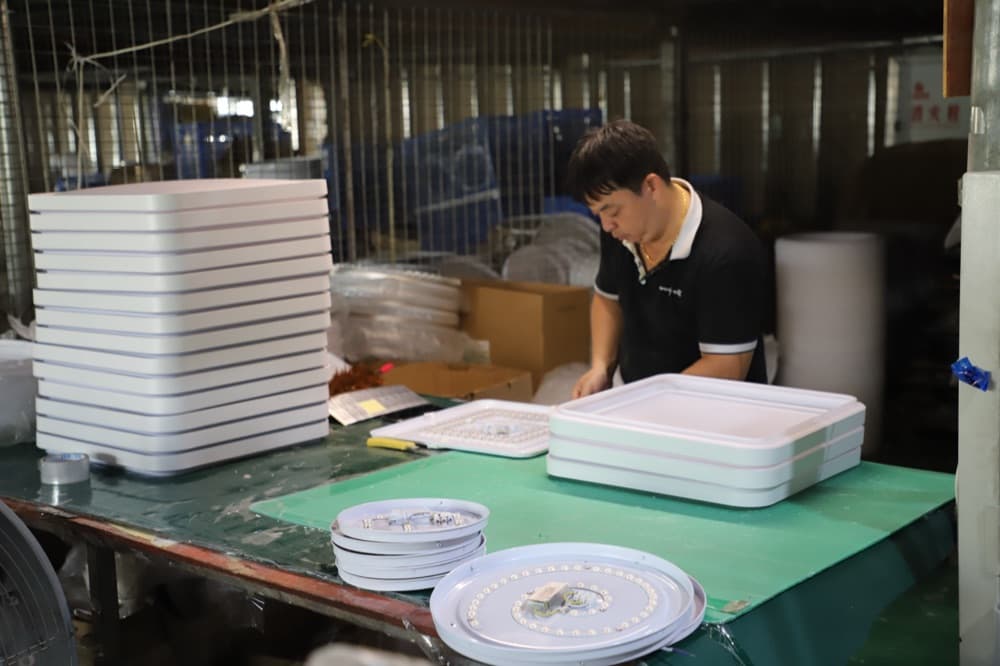
Cheap LED Ceiling Light Trap: Where Low-Quality Fixtures Cut Costs You Cannot See
A low quote on LED ceiling lights can hide cheaper drivers, lower-bin LEDs, thin heat sinks, recycled diffusers, skipped aging tests and weak certificates. Here is how importers can spot hidden cost cutting before a purchase order.
Read More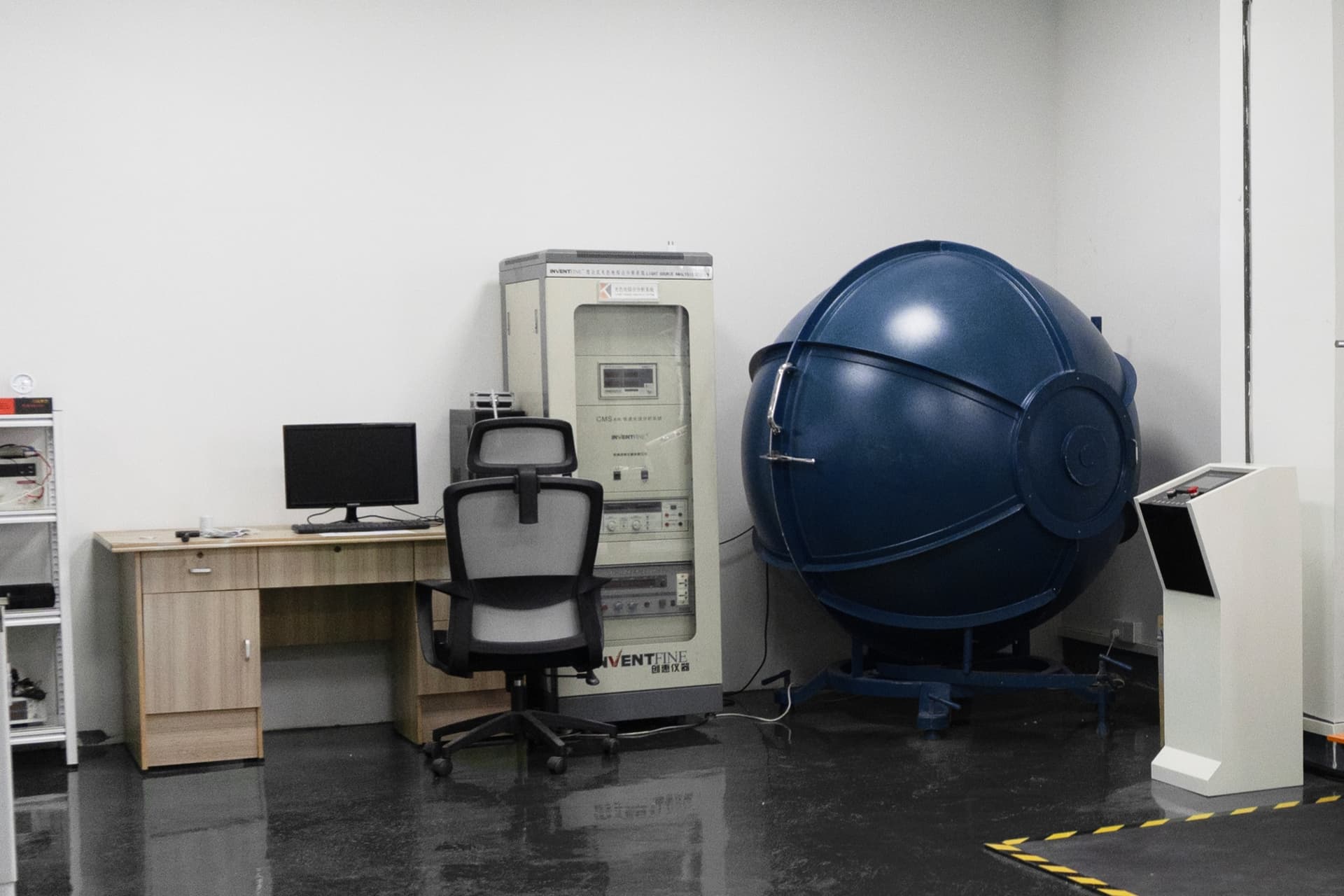
Inside Awta: The Quality Control Journey of an LED Ceiling Light
From the moment a reel of LED chips arrives at our gate to the final pre-shipment inspection, every Awta ceiling light passes through six structured QC stages. Here is what happens at each one — and what it means for the partners who put our product on their shelves.
Read More