
How to Choose a Reliable LED Ceiling Light Manufacturer in China
The gap between a real source factory and a polished trading company is often invisible from a first email. Here is the nine-point due-diligence checklist our overseas partners run before they put down a 30% deposit.
China is by some distance the dominant source of the world's LED ceiling lights, but the practical gap between a real source factory and a polished trading company is often invisible from a first email. Pick the wrong partner and you lose 8-12 weeks on samples that never arrive, get hit with surprise tooling fees, or open a container of units that fail your first pre-shipment inspection. This is the due-diligence checklist our overseas partners use before they put down a 30% deposit — the same one we wish more buyers ran on us.
Why This Matters Before Your First PO
A wrong-factory mistake is rarely caught at the sample stage. The sample is hand-built by the engineering team and looks great. Production runs on a different floor, sometimes in a different province. By the time the container arrives, the buyer has paid 100% of the order value, and the factory has 60+ days to "investigate" any claim. The leverage is gone. Due diligence belongs before the deposit, not before the shipment.
First: Source Factory or Trading Company?
Trading companies are not automatically bad — some run real QC, consolidate small orders, and add genuine value for first-time importers. But you should know which one you are talking to before you negotiate price. Three quick tells:
- Ask for a live video walk-through with today's date written on a whiteboard. Trading companies will stall, reschedule, or send last year's footage.
- Check the business license — Chinese licenses distinguish manufacturing (生产) from trading (商贸). Request the scanned PDF, not a screenshot.
- Ask who handles mold maintenance and SMT line changeovers. A trading company will pivot to "our partner factory" — note the answer.
1. Factory Age and Ownership Stability
Ten years in business means the factory has survived at least one downcycle. The China LED market saw a major shake-out from 2018 to 2020 — hundreds of "factories" listed on B2B platforms simply stopped operating, leaving overseas buyers with stranded molds and unfilled warranty claims. Pre-2015 establishment is a meaningful filter. Awta has been manufacturing ceiling lights since 2013.
2. Real Production Capacity
This is the hardest claim to fake — and the easiest to verify with a few direct questions:
- Total floor area, broken down by injection / blow molding / SMT / aging / assembly / packaging / warehouse
- Daily output by category (e.g. ceiling lights, downlights, panels)
- Which processes are in-house vs outsourced — outsourced SMT is a yellow flag, because driver quality loses one layer of QC
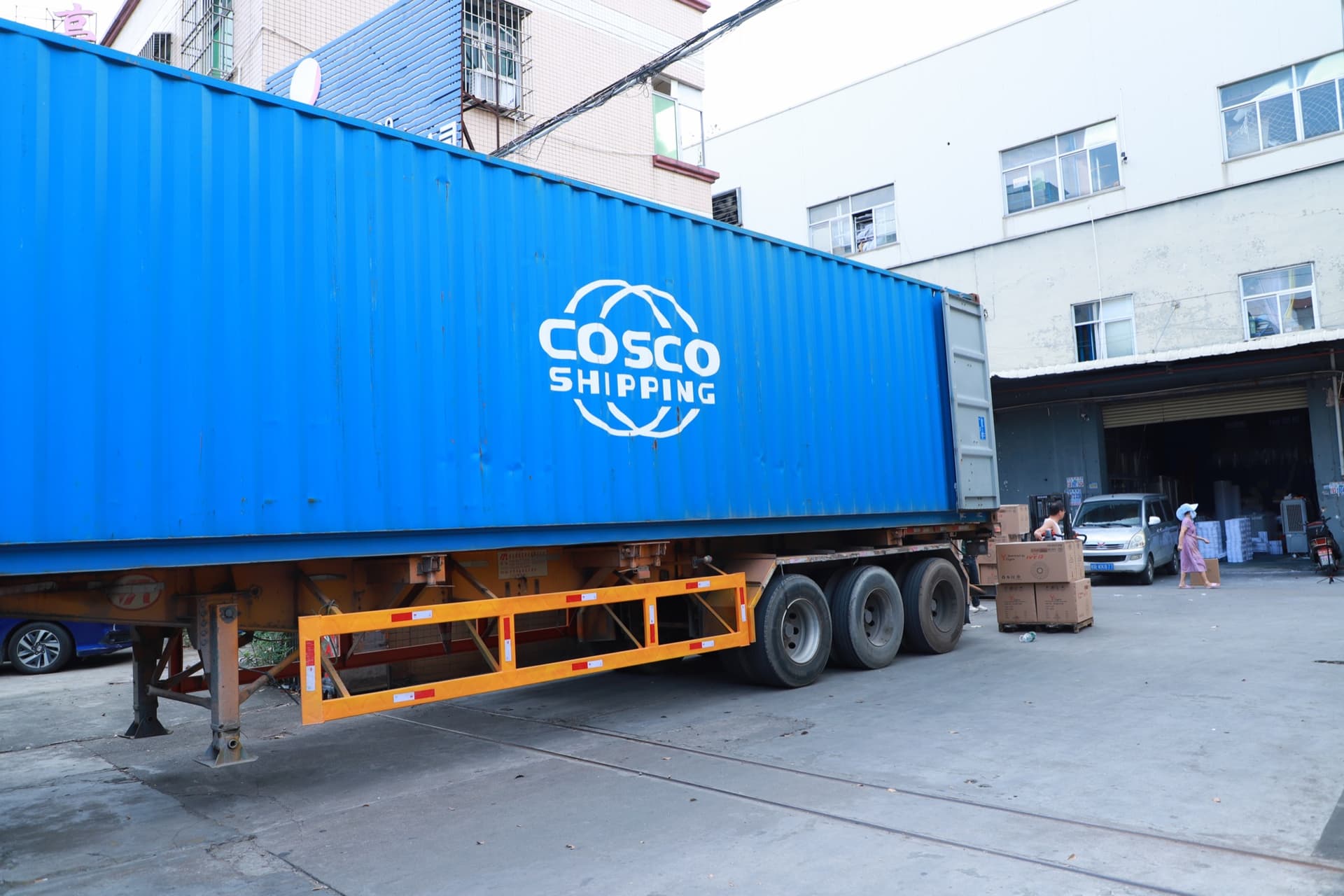
Awta runs 15,000㎡+ of in-house capacity covering injection molding, blow molding, SMT, aging, assembly and packaging — meaning every layer of QC is under one roof.
3. Equipment List with Photos and Serials
Ask for an equipment list with brand, model and quantity per process line. Reputable factories share this without hesitation. Cross-check the list against the production volume claimed: a factory quoting 50,000 ceiling lights per month with two injection machines and one assembly line is overstating its real capacity. Date-stamped whiteboard photos beat marketing brochures every time.
4. Certification Depth and Authenticity
Certifications are non-negotiable for customs clearance, but they are also one of the most-faked documents in the industry. Two rules:
- Each certificate names an issuing body — TÜV, Intertek, SGS, UL, Bureau Veritas, etc. Verify the certificate number directly on the issuer's online database, not on the factory's website.
- Request the full PDF report, not screenshots. The first page often shows compliance to a 2018 standard but page 12 shows the actual product tested was a different model.
Awta's certificate library covers CE, CCC, ETL, TÜV, RoHS and EMC — full PDF reports available on request, with verifiable numbers from each issuing lab.
5. QC Flow That Goes Beyond Final Inspection
A serious QC operation has four layers, not one:
- IQC — incoming components (LED chips, drivers, PC diffusers, screws) checked on arrival
- IPQC — in-process checks at injection, SMT, and assembly stations
- OQC — 100% aging test (2-4 hours at full load), 100% electrical safety, AQL 2.5 visual sample
- PSI — optional third-party inspection by Intertek / SGS / Bureau Veritas before shipment
A factory that only describes "final inspection" without naming the four layers is a factory whose driver failure rate will end up in your warranty bucket six months later.
6. Sample Turnaround and Sample Quality
For an ODM standard SKU with light customization, 1-2 weeks is normal. Anything beyond 4 weeks for a non-tooled sample suggests the factory is queueing your order behind larger ones — meaning your production will queue too. Beyond turnaround, examine the sample box: is the carton printed cleanly? Is the inner label aligned? Is the user manual translated correctly into the target market language? Sample-stage discipline predicts production-stage discipline.
7. Reasonable MOQ for Your Profile
For ceiling lights, ODM MOQ benchmarks are 100-300 pcs per model with light customization, and 500-1000 pcs with logo or housing-color changes. A factory quoting 5,000+ pcs MOQ on a first order is set up for bulk OEM clients — fine if that is you, but a poor fit for distributors building a multi-SKU catalog. Ask about consolidated MOQ across SKUs (e.g. 1,000 pcs total across three models). Flexibility here is a reliable signal of factory maturity.
8. Export Track Record and Market-Specific Familiarity
Ask which markets the factory ships to each month, and request container-loading photos for shipments into your target region. A factory that actively ships to your market already knows the local certification quirks — for example, that German retail chains require EPREL registration for tunable-white SKUs, or that Saudi customs flags fixtures without SASO conformity certificates. Track record beats specifications.
9. After-Sales Response — The Part Nobody Tests Until It Is Too Late
Get the after-sales policy in writing before the deposit, including:
- Warranty period (2 years on LED chips and drivers is standard)
- Replacement policy: free replacement vs parts-only vs credit on next order
- Maximum defect rate the factory covers without dispute (typically 0.3-0.5%)
- Acknowledgement SLA for defect claims (48 hours is reasonable)
Quick Due-Diligence Checklist
A scannable summary you can paste into a vendor scorecard. Use the middle column when you draft your audit-call agenda; use the right column to benchmark any factory against a working source-factory baseline.
| Check Point | What to Ask the Factory | Awta Benchmark |
|---|---|---|
| Factory age & ownership | When was the company registered? When did ceiling-light production start? | 13 years in ceiling lights, established 2013 |
| In-house production capacity | m² breakdown by process; daily output by category; in-house vs outsourced steps | 15,000㎡+, in-house injection / blow molding / SMT / aging / packaging |
| Equipment list | Brand, model and quantity per process line, with photos and serials on request | Full equipment list shared on request, with date-stamped photos |
| Certifications | Issuer, certificate number, full PDF report — verifiable on the issuer's database | CE, CCC, ETL, TÜV, RoHS, EMC — full reports available on request |
| QC layers | IQC / IPQC / OQC / PSI documented in writing, not just "final inspection" | Four layers; 100% aging 2–4h; 100% electrical safety; AQL 2.5 visual |
| Sample turnaround | Days from confirmed spec to sample dispatch; sample fee structure | 7–10 days ODM standard; 4–6 weeks OEM with existing tooling |
| MOQ flexibility | Per-SKU MOQ and consolidated MOQ across multiple SKUs | 100–300 pcs / SKU ODM; consolidated MOQ negotiable |
| Export track record | Monthly volume by destination market; container-loading photos for your region | Monthly shipments to EU, North America, the Middle East and Southeast Asia |
| After-sales policy | Warranty term, replacement terms, defect-rate cap, claim acknowledgement SLA | 2-year warranty; replacement-first; 0.3–0.5% defect cap; 48h claim SLA |
Red Flags Worth Walking Away From
- Refuses a live video walk-through, or only shows pre-recorded footage
- Quotes 30%+ below the median of three other quotes for the same spec
- First reply is "we can do anything you need" without engaging the spec
- Registered address does not match industrial-zoned land on Google Maps
- All communication via personal WeChat — no company email, no Alibaba audit
- Cannot or will not provide reference customer contacts in your region
How Awta Maps to This Checklist
We are a 13-year source factory with 15,000㎡ of in-house production — injection, blow molding, SMT, aging, assembly and packaging all under one roof. Our certificate library covers CE, CCC, ETL, TÜV, RoHS and EMC, with full PDF reports verifiable through each issuing lab. We ship monthly to Europe, North America, the Middle East and Southeast Asia, and our 200+ ceiling-light SKU catalog carries the certifications most distributors need on day one. ODM samples turn around in 7-10 days; OEM with our existing tooling in 4-6 weeks.
FAQ
Do I always need to source from Guangdong?
Guangdong is where the bulk of China's ceiling-light supply chain is concentrated — driver chips, PC raw material, packaging, certified testing labs and freight forwarding all cluster here. Sourcing from outside Guangdong is possible, but typically adds 1-2 weeks of inland logistics and narrows the testing labs you can reach on short notice.
How many factories should I shortlist before requesting samples?
Three to five for the first round of RFQs, narrowing to two for paid samples. Sampling more than two factories per spec wastes 4-6 weeks and rarely surfaces additional information you could not have learned from a structured factory audit call.
Is a smaller factory ever the right choice?
Yes — for very specialized designs or low-volume premium SKUs (under 500 pcs per order, high CRI ≥95, custom color housing), a smaller factory often gives more attention than a 15,000㎡ operation that prioritizes container-scale orders. Tradeoff: less certification depth, slower lead times.
How long should the entire vetting process take?
From RFQ to signed sample agreement, 2-3 weeks if you are running this checklist in parallel rather than sequentially. Add 2 weeks for sample shipment and evaluation. Total: 4-5 weeks from first email to "ready to commit to first PO."
Ready to Put a China Ceiling-Light Factory Through This Checklist?
Awta partners with importers, distributors and hospitality / residential project buyers across Europe, North America, the Middle East and Southeast Asia on OEM and ODM LED ceiling lights. The fastest way to evaluate us is to run us through the checklist above — we are happy to be benchmarked against any factory on your shortlist, point by point.
Three ways to start: → Send Your RFQ and our engineering team will respond in under 48 hours with verifiable certification numbers, MOQ tiers, FOB pricing and lead times. → Browse the Ceiling-Light Catalog for SKUs already certified for the major markets. → Read the OEM vs ODM Sourcing Guide if you are still mapping out the right path.
Related Articles
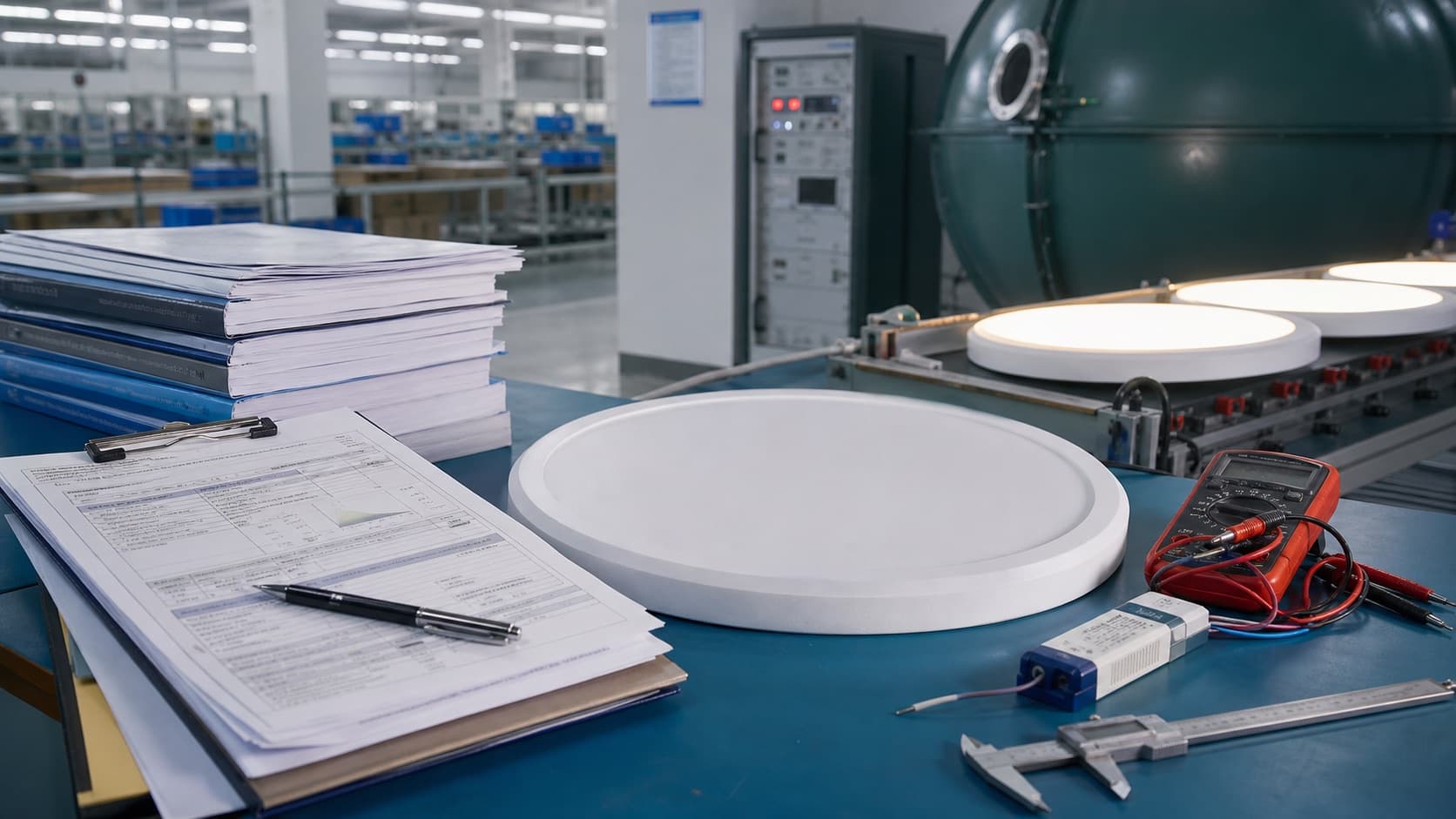
CE, RoHS, ETL and EMC for LED Ceiling Lights: What Buyers Need to Check
A logo on the box is not enough. Importers need to verify the directive, report, model family, applicant, product label and factory follow-up before they trust a ceiling-light certification pack.
Read More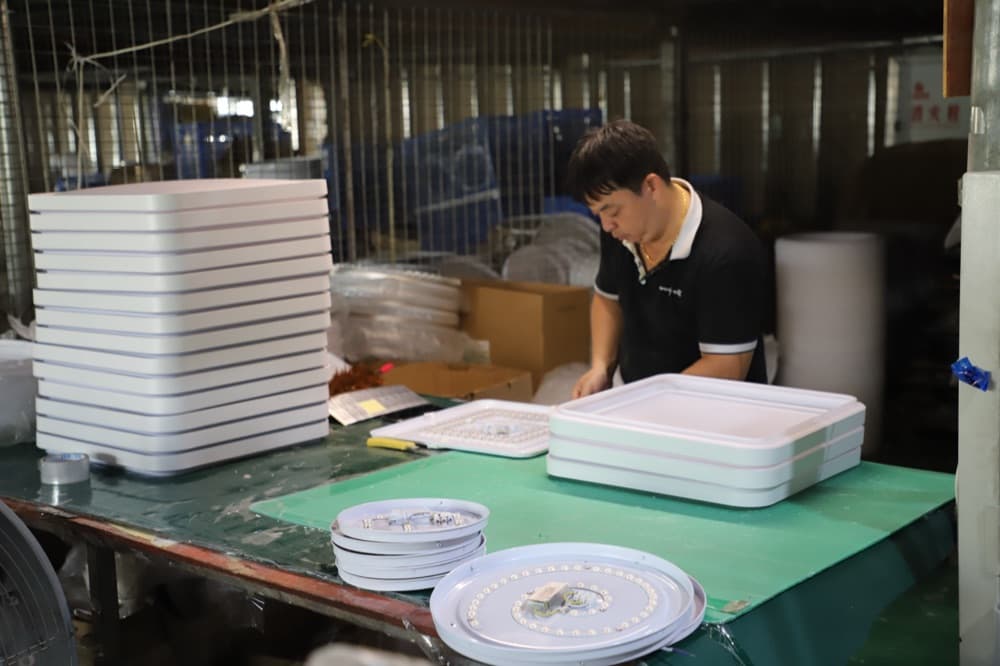
Cheap LED Ceiling Light Trap: Where Low-Quality Fixtures Cut Costs You Cannot See
A low quote on LED ceiling lights can hide cheaper drivers, lower-bin LEDs, thin heat sinks, recycled diffusers, skipped aging tests and weak certificates. Here is how importers can spot hidden cost cutting before a purchase order.
Read More